
The vault
Every letter, in one place.
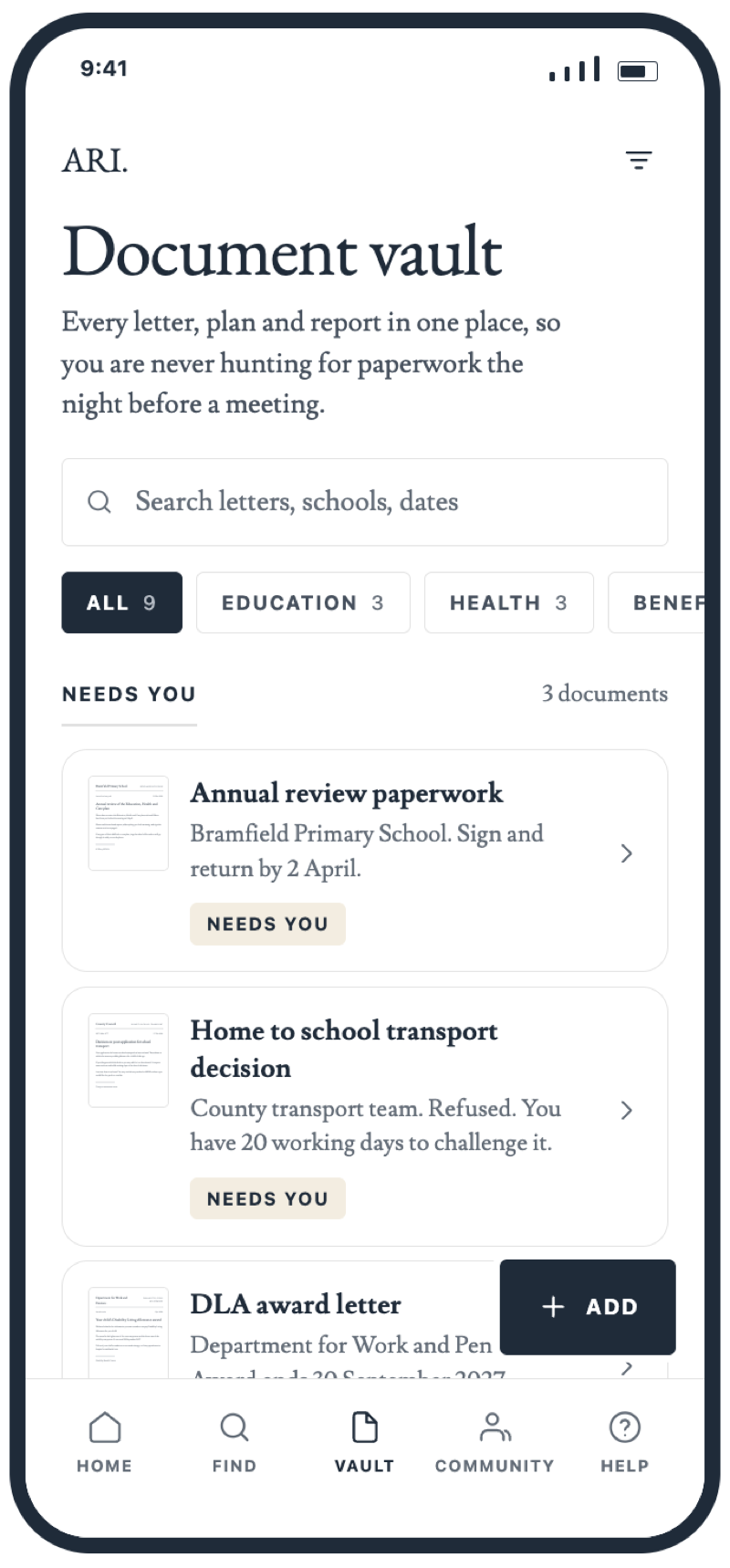
Paperwork is where support gets lost. Letters from three different services, a plan that changes without anyone saying so, and a deadline nobody mentioned. The vault is our answer to that, and it is the part of ARI we have thought about hardest.
None of it is built. What follows is the thinking, put out early so you can tell us which parts matter and which are beside the point.
Why this matters
Three things make SEND paperwork hard.
It arrives from everywhere
Education, health, social care
Three services, three systems, none of them talking to each other, and all of it landing on one kitchen table.
It changes quietly
Wording moves between versions
A plan comes back reissued. Setting last year's wording beside this year's is harder than it sounds.
It runs to a clock
Deadlines you were never told
Statutory timescales, response windows, dates to challenge a decision. Miss one and the route closes.
One idea, in more detail
Getting ready without the midnight scramble.
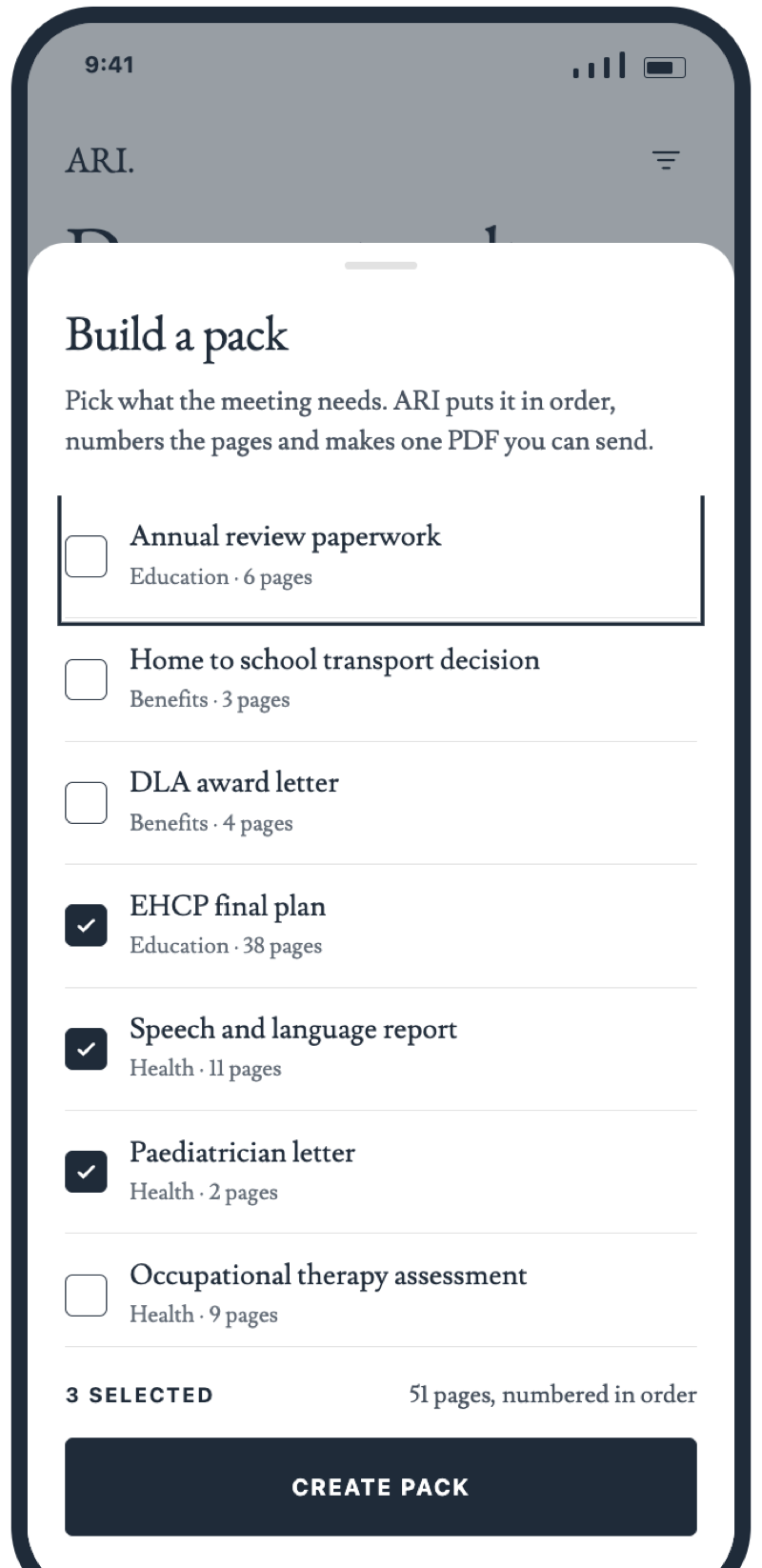
The idea here is that you pick what the meeting needs, the app puts them in order and numbers the pages, and you have one file to send. Preparing, not certifying: what goes in is your call, and nobody can tell you from an app whether a bundle satisfies a particular hearing.
Early thinking
Ideas we are weighing up.
These are the ideas we keep coming back to for the vault. None of them are built yet, which is why putting them all in one place makes it easier to say which ones matter.
A few would need someone who knows the law to look at first. Tell us whether the vault is what to build first.
Getting it in
However it arrives
Photograph a letter, upload a file, or forward an email. It lands in the same place.
Getting it in
Sorted by where it came from
Education, health and benefits separated as it arrives, so you can find the health reports without reading nine letters.
Getting it in
Every version kept
When a plan is reissued the old one stays. You can look back at what it said before.
Keeping to time
The twenty weeks, counted
The statutory stages from request to final plan, shown as a countdown with a nudge before each one.
Keeping to time
What needs you today
One short list of what is waiting on a signature, a reply or a date, instead of a folder you have to read.
Reading what you were sent
Section F as a checklist
The provision section pulled out into a list you can tick through against what is actually happening.
Reading what you were sent
What changed this year
The new plan laid over the old one, so wording that has quietly weakened is easier to spot.
Reading what you were sent
Needs with nothing against them
A check that every need named in the plan has provision written against it, so you know what to ask about.
Signing and sending
Sign on the phone
Sign a form with a finger or a stylus. No printer, no scanner, no trip to the shop.
Signing and sending
Or sign it on paper
Photograph the page you signed by hand and it drops back into the right place in the document.
Signing and sending
Proof it arrived
A link that expires, with a timestamp showing when it was opened, so a request cannot quietly go missing.
When you have to push
A record of the chasing
Every request and every silence logged, with the timeline exportable if it is ever needed.
When you have to push
A pack for a hearing
Chosen documents in order, page numbered, shared for a fixed window rather than forever.
When you have to push
A first draft, never a final one
Your records mapped against the framework to start an appeal document, which you would then take to someone qualified.
Working with professionals
A way in for a therapist
A time limited pass so a professional can add session notes without seeing everything else in the vault.
Working with professionals
Something to hand a consultant
Logs pulled into one clear report to take to an appointment, instead of trying to remember six months in ten minutes.
What we will not do with it.
It stays yours
Everything you put in comes out again, in a form you can read without ARI. If we stop being useful, nothing is held hostage.
It is not for sale
A child's records are not a data set. They will not be sold, rented, or used to build an advertising profile of your family.
Nobody sees it by default
Sharing would always be something you switch on, for a named person, for a set length of time, and switch off again.
We are not your solicitor
Anything the app helps you draft or check is a starting point for a conversation with someone qualified, never a substitute for one.
This site collects an email address and a first name, and nothing about your child. Here is exactly what we hold and why.
Which of these would you actually use?
Sixteen ideas is too many to build well. Knowing which three change a week for you is the most useful thing anyone can tell us right now.